


Look closely at a woven fabric and you begin to see where its strength comes from—not from any single strand, but from the way the warp and weft come together, each adding tension and colour, held together over time. That same principle is visible in Lions’ CSR partnerships across India. Corporate resources bring scale. Knowledge built over decades of service brings direction. Volunteer commitment supplies the hands-on effort that turns intent into action.
What these partnerships set in motion continues to shape lives over time: a cancer ward in Visakhapatnam, Andhra Pradesh, where treatment continues year after year, supported by equipment chosen to last; government schools in Ernakulam district, Kerala, where access to clean drinking water no longer depends on the season; a centre in Lucknow, Uttar Pradesh where women have the space to grow, earn and flourish. In each case, the pattern is similar: local Lions identify the need, partners step in with support that fits the task, and the work moves forward with care and accountability.
What sets these collaborations apart is their focus on continuity. Across districts and causes—healthcare, education, hunger relief, environmental work—the emphasis remains the same: understand the need clearly, apply resources responsibly, and stay engaged long enough for the change to hold. The stories that follow trace this work as it unfolds across communities, through partnerships woven with patience and meant to last.
MD 316: Care That Grows with Need
A family arrives at the Lions Cancer & General Hospital in Visakhapatnam from rural Odisha, carrying test results that confirm their worst fears. They find not just specialist cancer care, but a system designed around the full range of what they will need—diagnostics, surgery, pain management, nutrition counselling, and palliative support. Here, cancer is not treated in isolation. The financial strain, physical complications, and emotional weight that accompany it are acknowledged and addressed as part of care.
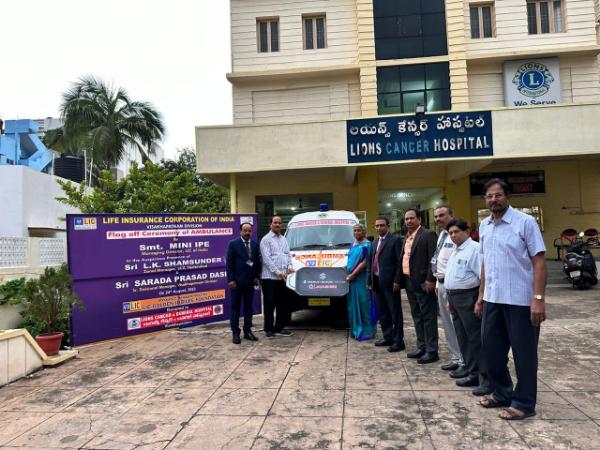
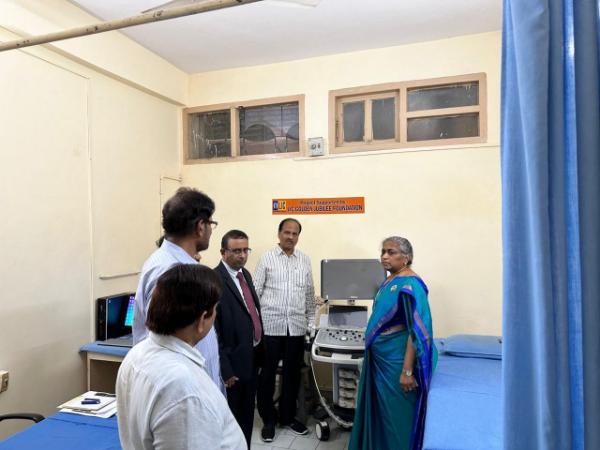
What allows this to happen is the way different strands of support have come together over nearly three decades. The hospital opened in 1996 as a dedicated cancer facility. Since then, CSR partnerships—from foundations, corporates, public sector institutions, and individual philanthropists—have enabled it to expand into comprehensive care. Infrastructure upgrades made room for new departments. Equipment donations introduced advanced treatment capabilities. Renewable energy installations reduced operational costs, freeing resources for patient care. Each contribution built on the last, strengthening an institution that now serves around 30 outpatients each day and completes nearly 60 surgeries a month.
More than 35,000 cancer patients have been treated here, many travelling from Telangana, Chhattisgarh, and Odisha when local options fall short. The hospital operates round the clock because illness does not follow business hours. During the pandemic, it adapted quickly, conducting vaccination drives that reached close to 25,000 people. Today, a major HPV vaccination program is underway—helping prevent cervical cancer before it begins—supported through CSR contributions from Visakhapatnam Port Trust.
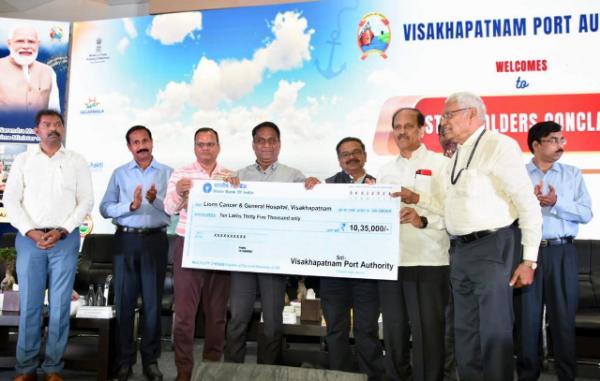
Under the leadership of Managing Trustee PDG Prof. V. Uma Maheswara Rao, the hospital reflects what sustained partnership makes possible: not just a facility that endures, but one that grows more responsive to community health needs over time.
CSR Partners
• LIC Golden Jubilee Foundation
• Laurus Charitable Trust
• Devi Sea Foods CSR Foundation
• Visakhapatnam Port Trust
• L&T Geo Structure Ltd.
• Hindustan Shipyard Ltd.
• Nekkanti Sea Foods
• Daspalla Hostels Pvt. Ltd.
• Sravan Shipping Services
• Steel City Securities Ltd.
• Individual philanthropists
Donations to the Trust are exempt under Section 80G of the Income Tax Act, 1961. The hospital is registered with the Government of India to undertake CSR activities.
MD 318: Homes, Water, and the Work of Stability
For many families, housing insecurity is not a temporary inconvenience. It shapes daily decisions—where children study, how illness is managed, and whether work can be pursued with stability. In parts of Kerala, this uncertainty has lingered for years, even among families who own small parcels of land but lack the means to build a safe, permanent home.
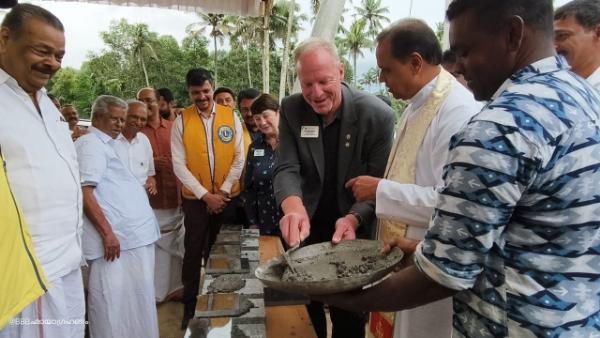
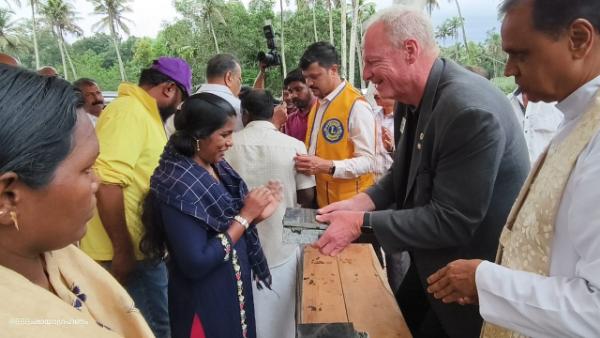
Snehaveedu, a CSR-supported housing initiative by District 318C, addresses this gap with clear purpose. In partnership with the K. Chittilappilly Foundation, Kochi, the district has committed ₹3 crore towards the construction of permanent homes for underprivileged families across Ernakulam, Idukki, and Alappuzha districts.
Under the project, financial assistance of ₹3 lakh is being provided to each family that owns five cents of land or less and lacks access to secure housing. Each house is modest in size—up to 450 square feet—but designed to meet essential needs with dignity. These clear eligibility parameters ensure the support reaches the most vulnerable sections of society.
While the initial commitment covers 100 houses, the project has the flexibility to scale. Based on progress and resource availability, District 318C plans to extend the initiative to 200 homes. Construction has begun on 55 houses, with completion planned for February 2026. Work on the remaining homes will follow, with the district aiming to complete the project by May 2026.
Beyond walls and roofs, Snehaveedu offers families stability. A fixed address supports school attendance, access to healthcare, and the ability to plan for the future. In this sense, each home becomes a foundation for dignity and opportunity.
That same focus carries into District 318C’s work with government schools in Ernakulam district. In many government schools, the absence of safe drinking water shapes the school day in small but persistent ways. Children fall ill more often. Classrooms lose focus. Teachers spend time addressing health concerns instead of lessons. For years, this affected how students experienced school long before learning could begin.
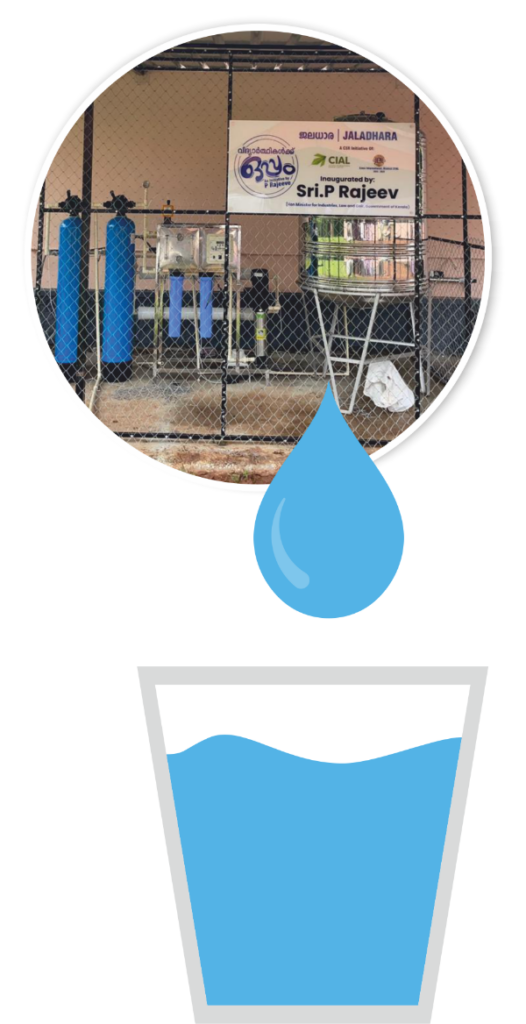
Recognising clean drinking water as essential to health and learning, District 318C partnered with Cochin International Airport Limited (CIAL) to install and upgrade water purification, storage, and distribution systems in government schools across Ernakulam. The aim was to ensure a reliable and consistent supply of potable drinking water for students and teachers throughout the school day.
Aligned with the UN Sustainable Development Goals
This MD 318 initiative supports the following UN Sustainable Development Goals:

SDG 3
Good Health & Well-being

SDG 4
Quality Education

SDG 6
Clean Water & Sanitation
The CSR contribution of ₹2.93 crore was used solely for drinking water infrastructure, and installations were planned with maintenance in mind so that they would continue to function well beyond the initial rollout. The emphasis remained on everyday usability rather than short-term fixes.
The effects are visible in daily school life. Reduced exposure to water-borne illnesses has meant fewer absences. Teachers report better concentration in classrooms. For students, access to clean drinking water is no longer a daily concern, allowing schools to function as they should.
Both projects were conceived and initiated by the then District Governor Rajan Namboothiri, with current District Governor K. B. Shine Kumar carrying the legacy of service forward with equal commitment.
MD 320: Building Capacity Where It Matters Most
At Ramdevrao Hospital, patients arrive with medical emergencies that demand urgent response. As a not-for-profit hospital, it serves people who often reach care late and with limited options, relying on treatment and equipment that must be ready when they arrive.
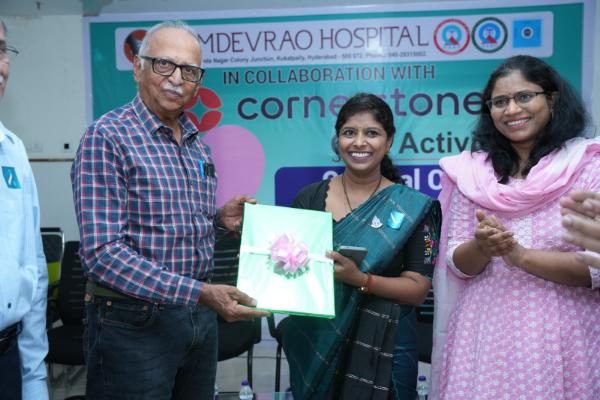
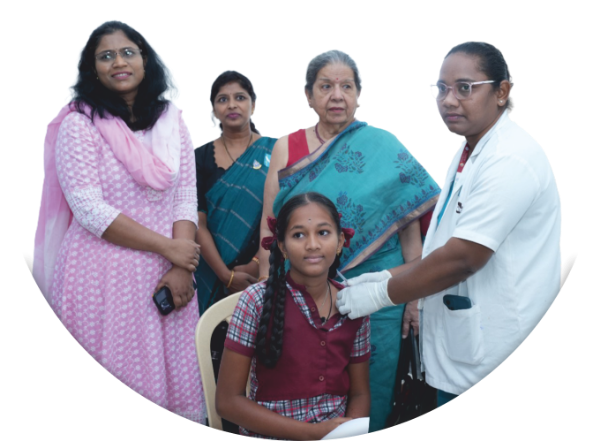
In coordination with Hyderabad Pranahita Lions Club, District 320D, two healthcare initiatives were undertaken at the hospital as part of Cornerstone’s CSR-supported service. A free cervical cancer vaccination drive was conducted for government schoolchildren, helping protect young girls against HPV and reinforcing the importance of preventive healthcare. Alongside this, a new ventilator unit was inaugurated, strengthening the hospital’s critical care capacity and its ability to respond to medical emergencies.
The vaccination drive addressed risk before illness could take hold. The ventilator expanded the hospital’s capacity to treat patients requiring life-saving support—particularly those from economically weaker sections who depend on such institutions for affordable care.
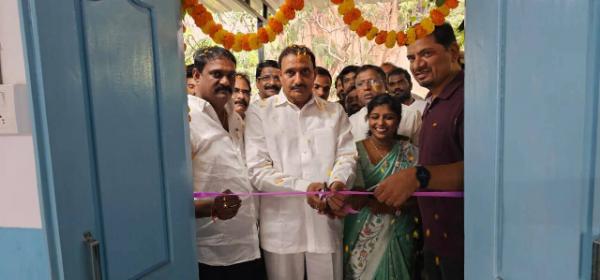
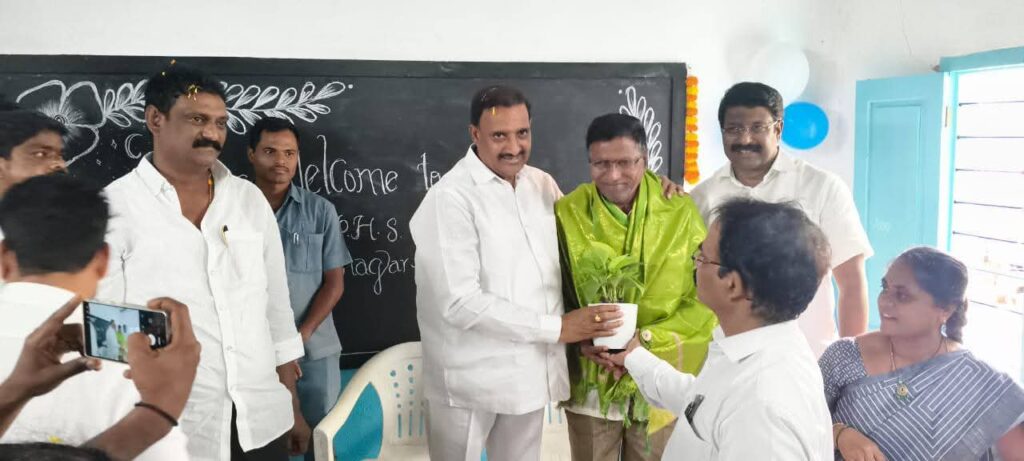
Hyderabad Pranahita Lions Club partnered with Cornerstone again to complete a ₹22 lakh classroom construction project serving around 150 students. The project included well-designed classrooms along with a dedicated dais, creating a safer and more structured learning environment.
The improved layout supports daily teaching and enables academic and cultural activities to be conducted more effectively. For teachers, the space allows clearer engagement with students. For students, the structured environment supports focused learning—an important shift in schools where infrastructure has long limited opportunity.

CSR Collaboration in Practice
CSR Partnerships with Lions take many forms, shaped by community needs and shared priorities. They include:
- Co-creating projects aligned to social goals
Supporting cause-led initiatives rooted in local contexts - Engaging employees through volunteerism and workplace giving
- Co-funding large community projects with clear outcomes
- Building long-term programs that integrate service with organisational values
Each reflects a different way of working together—practical, accountable, and grounded in everyday realities.
MD 321: Capacity That Saves Lives, Work That Sustains Livelihoods
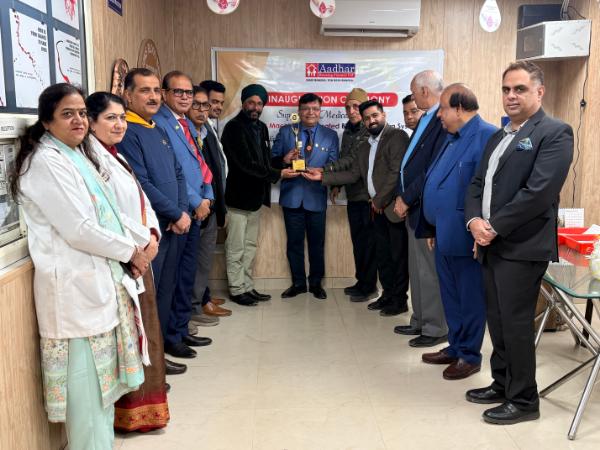
At the Lions Blood Bank in Gurugram, demand rises sharply during medical emergencies. Dengue outbreaks, cancer treatments, and blood disorders create urgent shortages of platelets—support that can mean the difference between recovery and crisis. In such moments, speed and quality are decisive.
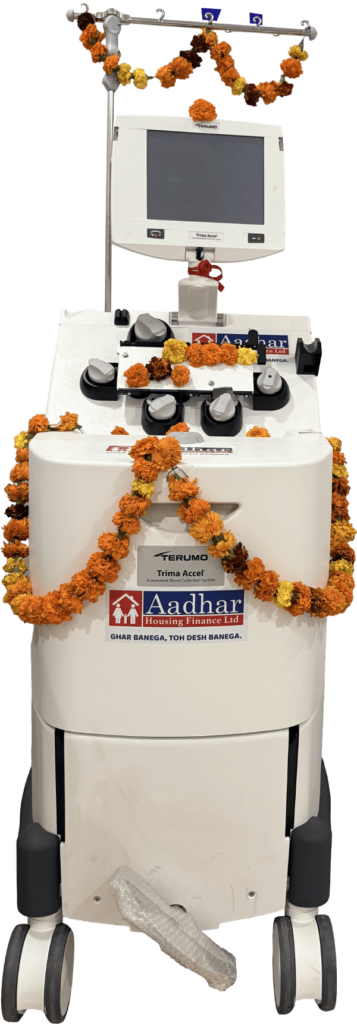
To strengthen this capacity, Aadhar Housing Finance Limited contributed an apheresis machine worth ₹42.65 lakh under its CSR initiative to the blood bank, a project of Gurgaon City Lions Club, District 321A1.
The machine significantly improves the blood bank’s ability to provide single donor platelets for critically ill patients.
The apheresis system allows platelets to be collected safely from a single donor while other blood components are returned. This reduces donor dependency, improves platelet quality, lowers infection risk, and shortens processing time—crucial advantages during emergencies.
For nearby hospitals in Gurugram and surrounding areas, the impact is immediate. Faster availability of high-quality single donor platelets improves emergency response and supports ongoing treatments for cancer patients and others requiring regular transfusions. The blood bank expects around 800 patients to benefit annually from this enhanced capacity.
Beyond emergency healthcare, MD 321 has focused on building sustainable livelihoods through skills and employment.
Each morning, women arrive at the Mahila Kalyan Kendra (Women’s Welfare Centre) run by Lucknow Pratistha Lions Club, District 321B1, carrying more than their lunch boxes—they bring the confidence that comes from earning their own income. For many, this work represents their first formal employment, a shift from economic dependence to financial independence, built one day at a time.
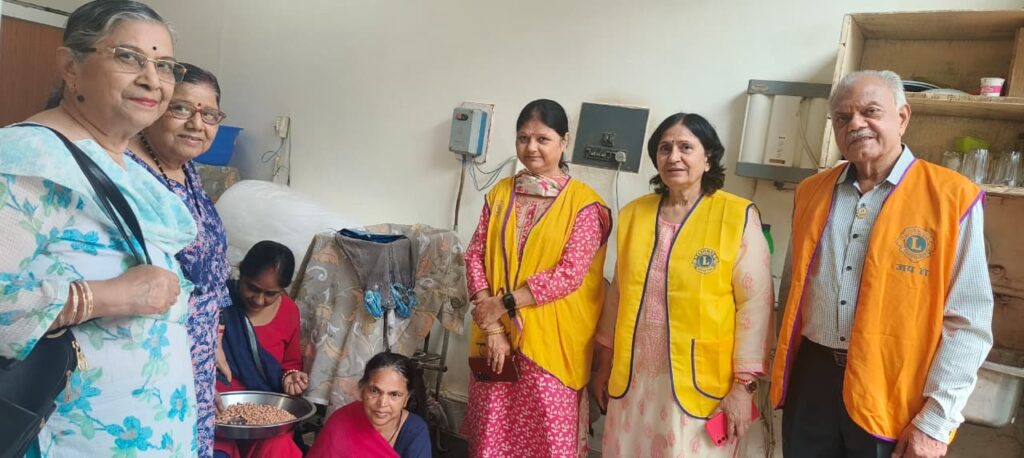
The Mahila Kalyan Kendra was founded in 2005 by three Lions: Lt. Kusum Seth, Vineeta Mathur, and Anurag Chandra. With sustained CSR support from ONGC, the centre has carried forward their vision, providing long-term livelihoods through dignified work opportunities.
Today, the Kendra employs eight women and four men full time, supported by part-time staff handling accounts and deliveries. Equipped with modern machinery, the facility maintains efficient production standards, while the club provides clothing and hygiene essentials for women workers, reinforcing safety and dignity at the workplace.
The centre produces staple food items such as atta and besan, along with snacks, pickles, and masalas—products that generate steady income while building transferable skills.
MD 3231: Consistent Meals, Sustained Dignity
At Sant Gadge Maharaj Dharamshala in Dadar, patients and their families arrive carrying more than medical concerns. Many travel from distant towns for treatment they cannot access locally, staying for weeks while managing illness, uncertainty, and the daily question of where the next meal will come from. For these families, hunger is not theoretical—it compounds an already difficult situation.
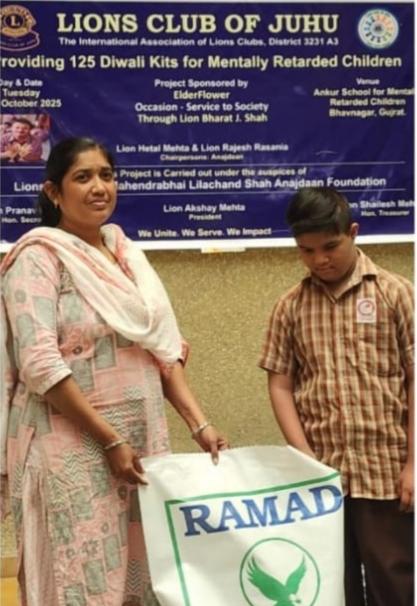
Recognising this need, Juhu Lions Club, District 3231-A3, has built a sustained hunger relief initiative designed around consistency rather than one-time distribution. The club’s CSR partners U&N Foundation and Elderflower have committed ₹45.75 lakh in CSR support to fund regular meal services for patients, children with intellectual disabilities, and economically disadvantaged communities across multiple locations—from Sant Gadge Maharaj Dharamshala in Dadar, Parel, and Byculla to Ashok Singal Rugna Seva in Sion, Ankur School in Bhavnagar, and Nana Palkar Smruti Samiti in Parel.
As of December 2025, the club has completed more than 290 hunger relief activities, benefitting 1,03,000 people.
The scale of the program reflects sustained engagement. Since its launch, the initiative has completed 290 activities, with 110 more to be completed by March 2026, bringing the total to 400 funded meal distribution efforts, with over 1,40,000 meals and 28,000 breakfasts.
What makes the model effective is its regularity. Meals are not distributed sporadically but according to a schedule that communities can rely on. Patients undergoing extended treatment know when food will arrive. Caregivers can plan around that certainty. Students at the Ankur School for children with intellectual disabilities receive nutrition as part of their daily routine, not as charity that appears unpredictably.
Under the coordination of Bharat J. Shah, the program operates with clear accountability—CSR funds are applied exclusively to food procurement and distribution, with tracking in place to ensure resources reach those they are meant to serve. The partnership with U&N Foundation and Elderflower has allowed the club to expand reach without compromising consistency.
Impact, like fabric, draws its strength from how it is made. When corporate resources align with Lions’ local knowledge and long-term presence, service becomes dependable rather than episodic. Across districts and causes, the work endures because it is planned, accountable, and carried forward with focus and transparency. Each strand supports the next, creating outcomes communities can rely on over time.
These are not the only CSR collaborations shaping Lions’ service across India. If your club is working to address local needs with continuity and care, we invite you to share your story with us.