


By Rajesh Agarwal
Twenty Lives a Day
Every day, roughly twenty people in India die waiting for an organ that never arrives. Several lakh names remain on the country’s transplant waiting lists. That is why every Lions Club in every district must treat organ donation awareness as a continuing purpose.
There is a particular kind of silence in an Indian ICU waiting area when a doctor walks out to speak with a family. It is the silence before the hardest question they may ever be asked: “Would you consider donating your loved one’s organs?”
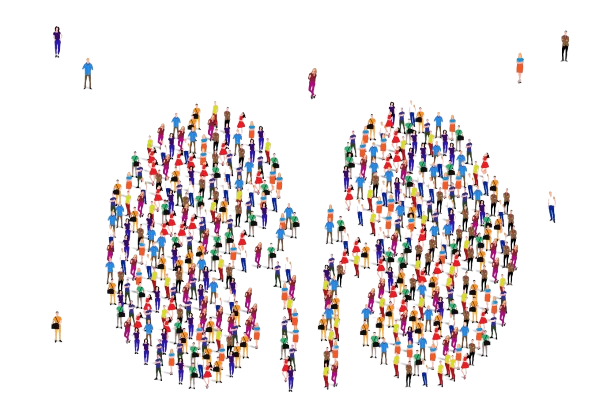
What that family decides can give strangers the chance to experience birthdays, weddings, board examinations and many more milestones that might otherwise never come.
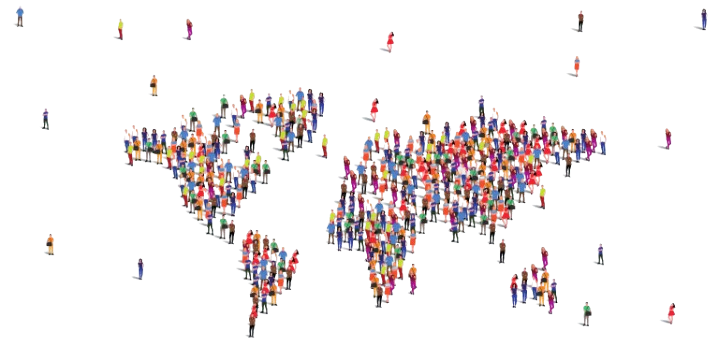
Yet, far too often in India, families say no—not because they object in principle or because their loved one did, but because the question catches them completely unprepared at the worst moment of their lives. Grief is a poor time to make a decision that could have been discussed years earlier, calmly, around a table.
This is where Lions Clubs, with about 1.4 million members worldwide, can make a difference: as trusted, familiar local voices that normalise this conversation, community by community, before families encounter it for the first time in a hospital corridor.
The Cost Of Silence
The human cost of waiting, in India
- More than 5 lakh Indians are estimated to be on organ transplant waiting lists at any given time.
- An estimated 20 people die every day for want of an organ.
- India’s deceased organ donation rate remains below one per million population—among the lowest in the world, compared with roughly 49 per million in Spain.
- Around 18% of all transplants performed in India in recent years came from deceased donors; the rest depended on the sacrifice of a living relative.
The last figure captures the crisis. India ranks third in the world for the total number of transplants performed, yet this success rests largely on living family members—disproportionately women—donating a kidney or a portion of their liver to a husband, father or son.
Deceased donation can reach a stranger with no family obligation at all. It remains rare not because Indians lack compassion, but because too few people have registered and even fewer have told their families what they want.
“Organs are needed on Earth, don’t take them to Heaven.”
Behind this simple message lies a profound truth. Once our life’s journey is complete, our organs are no longer of use to us, but they can become a priceless gift to others. One organ donor can save multiple lives and improve many more through tissue donation. It is an opportunity to Gift Life, After Life.
Myths That Cost Lives
Misinformation continues to discourage people from pledging their organs. Here are some common myths—and the facts.
“My religion does not permit organ donation.” — False
All major religions practised in India support organ donation as an act of compassion, charity and saving lives. Donation does not interfere with last rites or funeral customs.
“The body will be disfigured.” — False
Organs are retrieved through a respectful surgical procedure, after which the body is carefully restored. There is no visible disfigurement, and funeral rites can be performed as usual.
“Doctors won’t try as hard to save my life if I’m a donor.” — False
A doctor’s first priority is always to save the patient’s life. Organ donation is considered only after brainstem death has been independently certified by a legally mandated medical board separate from the transplant team.
“Only the rich receive donated organs.” — False
Organs are allocated according to medical need, compatibility and waiting lists—not wealth. Under NOTTO’s ‘One Nation, One Policy’, patients can register across states, making allocation more equitable.
Every myth replaced with the truth brings us one step closer to saving more lives.
“We ask people to believe in service they cannot see and results they may never personally witness. Organ donation asks the same faith of a family—and rewards it a thousand times over.”
The Decision Before the Decision
Nobody wants to think about their own death. That is precisely why the decision must be made before it is needed—in good health and in a calm room, as an act of foresight rather than crisis management.
Pledging as a donor is neither a morbid errand nor an inauspicious subject. It is a promise that, if the worst happens, something good may still be possible for another family.
Twenty people will not survive today’s wait for an organ in India. Tomorrow, twenty more will be at risk unless enough of us decide, in advance, to become the answer to someone else’s unbearable moment.
For more than a century, Lions Clubs have shown that ordinary people united by service can move numbers as stubborn as this one —from cataract blindness and leprosy to childhood vaccination. Organ donation awareness can become the next chapter in a story Indian Lions already know how to write.
“My religion does not permit organ donation.” — False
All major religions practised in India support organ donation as an act of compassion, charity and saving lives. Donation does not interfere with last rites or funeral customs.
Greening Their Surroundings
Environmental work has run alongside the club’s welfare projects. Members planted about 1,500 saplings at the Government Junior College campus, and near the Government Hospital. Separately, as part of a social forestry initiative, the club planted mango and jackfruit trees across five acres of land.
A Village, Adopted
Every month, members of Narsipatnam Lions Club, accompanied by visiting specialists, travel to Donkada, a village with a large tribal population. In its adopted village, the club conducts general medical camps as well as eye screenings for children below the age of 15.
In Chuttupalli, another village in the region, the club has built a community meeting space and a basketball court for residents.
Contributing To The Legacy of Melvin Jones
The club has 22 MJF recipients to date, with Dr. Gopala Rao personally contributing close to ₹39 lakh toward these recognitions. Beyond the club, he has supported 121 MJF recognitions at the district level and extended assistance to the district cancer hospital.
From a single library to a village adopted, Narsipatnam Lions Club’s growth has been steady — each project taking root in the one before it. Fifty-five years on, that legacy shows no sign of slowing.